
 EN
EN
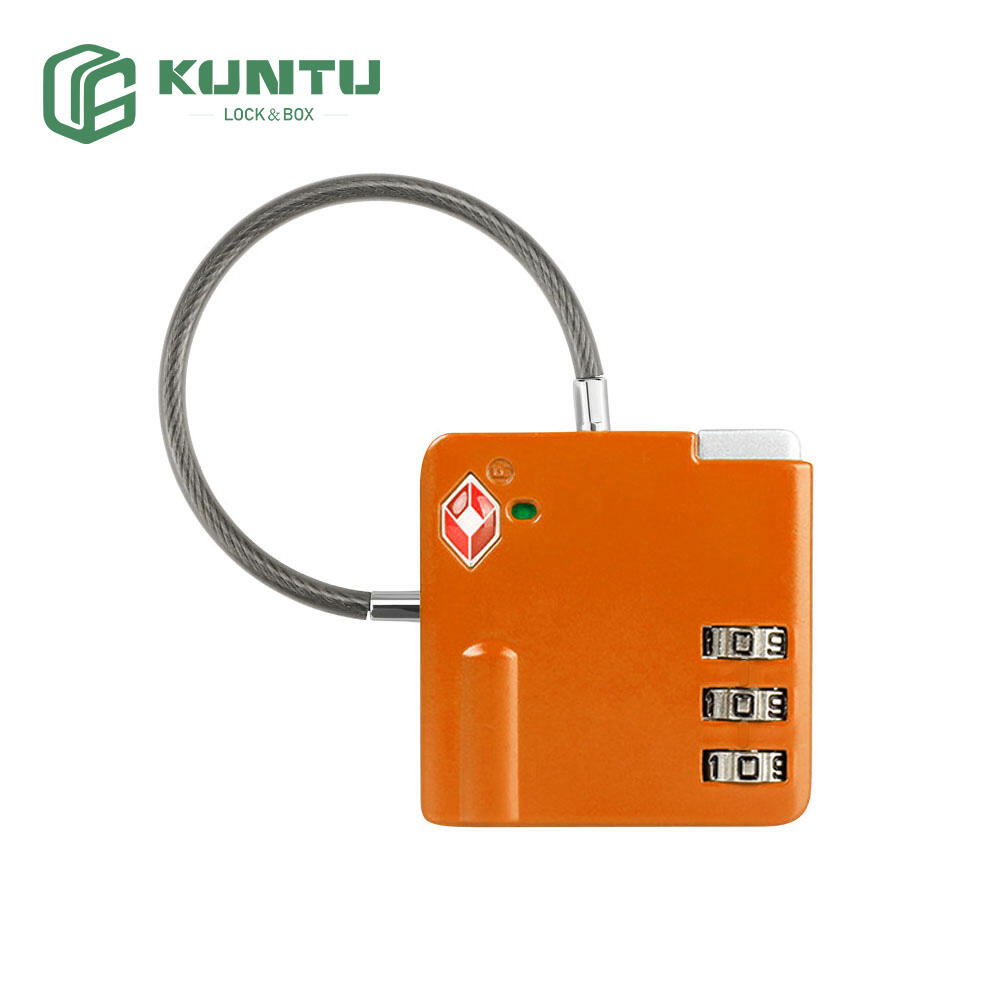
For B2B procurement professionals, selecting the right padlock is a balancing act: choosing a product that matches the actual security risk without overspending on unnecessary features or compromising safety with underperforming models. Yet, the jargon on padlock specifications—terms like "hardened steel", "CEN Grade", and "kilogram tensile strength"—often creates confusion, leading to costly mistakes. This guide demystifies key padlock standards and parameters, translating industry terminology into actionable insights. By understanding how these ratings correlate to real-world security needs (from deterring casual tampering to resisting violent forced entry), procurement teams can make informed decisions, avoid overconsumption or security gaps, and select the optimal padlock for every use case.
Core Material Term: What "Hardened Steel" Actually Means for Padlock Security
First, let’s break down the most common material claim: "hardened steel". Not all steel is created equal, and this term directly impacts a padlock’s resistance to cutting, drilling, and prying. Hardened steel refers to carbon steel that has undergone heat treatment—heating to high temperatures and then rapid cooling—to increase its hardness and durability. The hardness is measured on the Rockwell C (HRC) scale, with padlocks typically ranging from 45 to 60 HRC. A padlock with 55+ HRC hardened steel shackles and bodies can resist cutting from bolt cutters, drilling from power tools, and wear from harsh environments (e.g., construction sites, warehouses).
For procurement teams, the key is to avoid vague "hardened steel" claims—always verify the HRC rating. For low-risk scenarios (e.g., securing storage cabinets in restricted office areas), a 45-50 HRC padlock suffices. For high-risk applications (e.g., shipping containers, outdoor equipment yards), opt for 55+ HRC hardened steel to withstand deliberate attacks. Choosing a padlock without verified hardened steel specs often leads to premature failure, forcing costly replacements or exposing assets to theft.
International Security Standards: CEN 12320 (Europe) and ANSI/BHMA (U.S.)
To eliminate ambiguity, rely on globally recognized security standards that quantify a padlock’s resistance to forced entry. Two dominant standards guide B2B procurement: Europe’s CEN 12320 and America’s ANSI/BHMA.
CEN 12320 (European Standard): This standard classifies padlocks into six security grades (1 to 6), with Grade 6 being the most secure. Each grade is determined by rigorous testing against common attack methods—cutting, drilling, picking, and bumping—with minimum resistance times required. Grade 1 padlocks (low security) resist attacks for 1 minute, suitable for deterring casual tampering (e.g., locker rooms, low-value storage). Grade 3-4 padlocks (medium security) offer 5-10 minutes of resistance, ideal for warehouse gates, utility boxes, and commercial premises. Grade 5-6 padlocks (high security) resist attacks for 15+ minutes, designed for high-value assets like shipping containers, cash-in-transit vehicles, and critical infrastructure. When procuring for European markets, always look for the CEN 12320 grade mark to ensure compliance and matched security levels.
ANSI/BHMA A156.10 (U.S. Standard): Developed by the American National Standards Institute (ANSI) and Builders Hardware Manufacturers Association (BHMA), this standard rates padlocks into three security grades (1, 2, 3). Grade 1 (heavy-duty) is for high-traffic, high-risk applications, tested to withstand 100,000 cycles of use and forced entry attempts. Grade 2 (medium-duty) suits commercial and light industrial use, with 50,000 cycles of testing. Grade 3 (light-duty) is for residential or low-risk commercial use, tested for 20,000 cycles. Unlike CEN, ANSI/BHMA also evaluates durability for repeated use, making it critical for applications where padlocks are frequently opened and closed (e.g., delivery trucks, access gates).
Kilogram Tensile Strength: Measuring Shackle Resistance
Kilogram (kg) tensile strength refers to the maximum force a padlock’s shackle can withstand before breaking or deforming. This parameter is particularly important for resisting pulling, wrenching, or leverage attacks. Typical padlocks range from 500kg to 5,000kg tensile strength. For example, a 1,000kg tensile strength shackle can resist up to 1,000 kilograms of pulling force—sufficient for securing standard storage units. A 3,000kg+ shackle is necessary for high-risk scenarios, where attackers may use tools to pull or twist the padlock open.
Procurement teams should align tensile strength with the asset’s value and attack risk. Overlooking this parameter can lead to selecting a padlock with a weak shackle that fails under minimal force, even if the body is made of hardened steel. Conversely, paying for 5,000kg tensile strength for a low-risk cabinet is a waste of budget—1,000kg is more than adequate.
B2B Procurement Pitfalls to Avoid: Match Security to Risk
Pitfall 1: Overspending on High-Grade Padlocks Unnecessarily: Investing in a CEN Grade 6 or ANSI Grade 1 padlock for a restricted office supply closet is wasteful. These high-end models cost 3-5 times more than low-grade alternatives, and their advanced security features (e.g., anti-drill plates, pick-resistant cores) are irrelevant for low-risk scenarios. For such use cases, a CEN Grade 1 or ANSI Grade 3 padlock is sufficient, freeing up budget for high-risk areas.
Pitfall 2: Underestimating Risk with Low-Grade Padlocks: Using a CEN Grade 1 padlock to secure shipping containers or construction equipment is a critical error. Low-grade padlocks can be breached in minutes with basic tools, exposing high-value assets to theft. For these applications, CEN Grade 5-6 or ANSI Grade 1 padlocks with hardened steel shackles (55+ HRC) and 3,000kg+ tensile strength are non-negotiable.
Actionable Procurement Framework: Selecting the Right Padlock
To streamline padlock procurement, follow this three-step framework:
1. Assess Risk Level: Classify use cases into low (deter casual tampering), medium (resist intentional but basic attacks), and high (withstand violent forced entry using power tools).
2. Map Standards to Risk: Low risk → CEN 1-2 / ANSI 3; Medium risk → CEN 3-4 / ANSI 2; High risk → CEN 5-6 / ANSI 1.
3. Verify Key Specs: For medium-high risk, confirm hardened steel HRC (55+), tensile strength (2,000kg+), and compliance with CEN/ANSI standards.
By following this framework, procurement teams ensure that every padlock purchase delivers the right balance of security, durability, and cost-efficiency.
In conclusion, understanding padlock ratings—hardened steel, CEN/ANSI grades, and tensile strength—is essential for B2B procurement success. These specifications are not just marketing jargon; they are objective metrics that define a padlock’s real-world performance. By matching security features to actual risk levels, procurement professionals avoid costly pitfalls, optimize budget allocation, and protect their organization’s assets effectively. The right padlock isn’t the most expensive or the cheapest—it’s the one that perfectly aligns with your security needs.