
 EN
EN
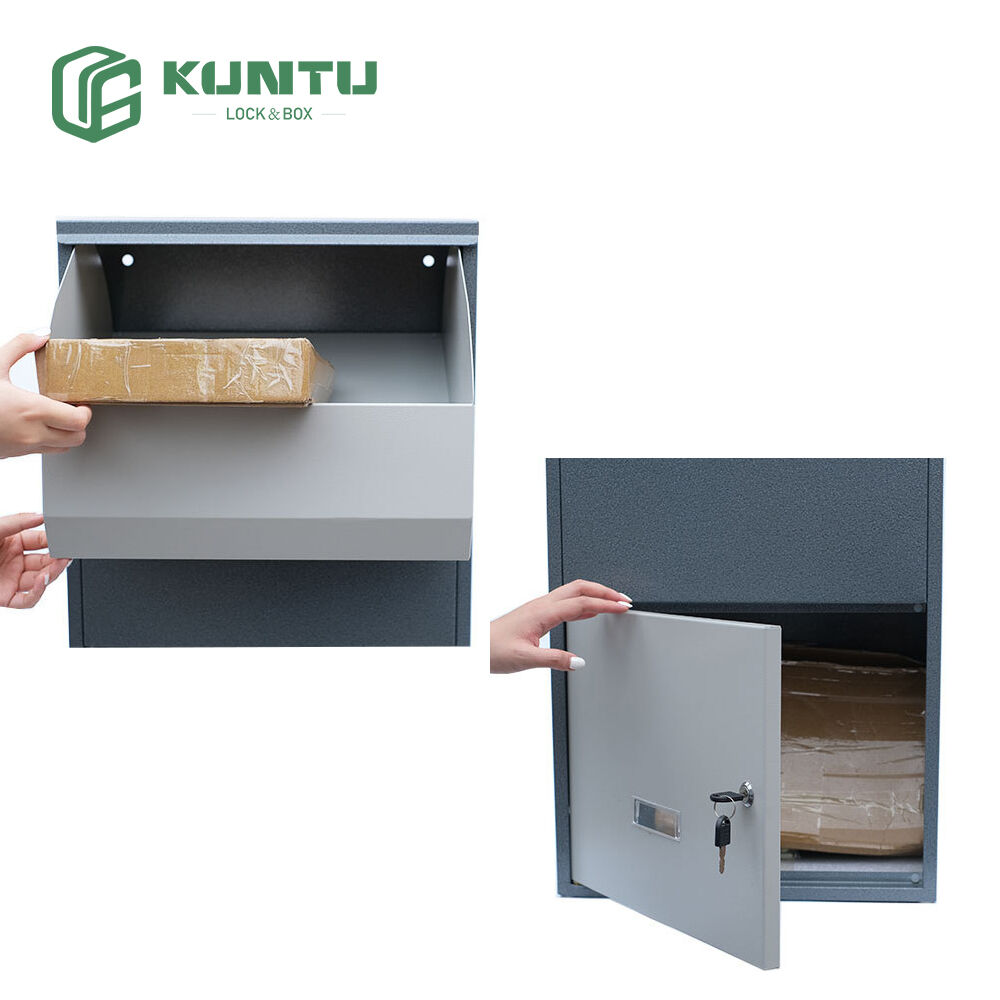
For luxury apartment operators and property managers, smartparcel deposit box systems have long been viewed as a necessary cost center—an infrastructure investment to address residents’ e-commerce delivery needs and maintain the property’s high-end appeal. However, forward-thinking operators are redefining the role of these systems, turning them from expense items into lucrative value hubs. By leveraging strategic monetization models—such as courier onboarding fees, premium storage services for residents, and targeted partnership opportunities—smart parcel deposit boxes can generate consistent revenue while enhancing resident experience. This shift not only offsets the system’s initial and operational costs but also boosts the property’s competitive edge, creating a win-win for both operators and residents.
The most straightforward monetization pathway for smartparcel deposit box systems lies in charging courier companies for access and usage. In premium apartment complexes, where delivery volumes are high and residents demand timely, secure deliveries, couriers (including major logistics firms and local delivery services) are willing to pay for exclusive or priority access to a reliable parcel deposit box network. Operators can structure these fees in multiple ways: a monthly or annual onboarding fee for courier companies to use the system, a per-parcel fee for each delivery deposited into the boxes, or a tiered pricing model based on delivery volume (with discounts for high-volume couriers). For example, a mid-sized premium apartment complex with 200 units might charge $500 per month per major courier (e.g., FedEx, UPS) for unlimited access, plus a $0.50 per-parcel fee for smaller local couriers. This model generates recurring revenue with minimal additional effort, as the system’s existing infrastructure handles the delivery process automatically.
Another high-potential revenue stream is offering premium storage services to residents, addressing the pain point of long-term or oversized parcel storage. While standard storage for a limited period (e.g., 48 hours) can remain complimentary to maintain resident satisfaction, operators can charge fees for extended storage (beyond the grace period) or for storing oversized items that require larger compartments in the parcel deposit box. For instance, residents might be charged $1 per day for each parcel stored beyond 48 hours, with a $5 flat fee for oversized items (such as furniture parts, sports equipment, or bulk purchases). Additionally, operators can introduce a premium subscription service—priced at $10–$20 per month—offering residents benefits like unlimited extended storage, priority access to large compartments, and personalized delivery notifications. This subscription model not only generates recurring revenue but also caters to high-demand residents (such as frequent travelers or remote workers) who value flexibility and convenience.
Strategic partnerships with local businesses and service providers further unlock the profit potential of smart parcel deposit box systems. Premium apartment residents represent a high-income demographic, making them an attractive target for brands in categories like gourmet food, luxury goods, wellness services, and home essentials. Operators can partner with these brands to use the parcel deposit boxes as a distribution channel for samples, exclusive offers, or subscription boxes. For example, a local artisanal bakery might pay to place complimentary pastry boxes in the system for residents, with a call-to-action to order full boxes via their app. A luxury skincare brand could offer residents a free sample set via the parcel deposit box, with a discount code for full purchases. These partnerships generate affiliate revenue or sponsorship fees for operators, while providing residents with curated experiences that align with the property’s high-end positioning. The parcel deposit box’s digital displays can also be monetized by selling ad space to partners, turning the system into a targeted marketing platform.
To quantify the profitability of a smart parcel deposit box system, operators can use a clear return on investment (ROI) calculation model that accounts for initial costs, operational expenses, and projected revenue streams. The key components of this model include:
- Initial Investment: Cost of purchasing and installing the smart parcel deposit box system (including hardware, software, and installation labor). For a premium apartment complex with 200 units, this typically ranges from $15,000 to $30,000, depending on the number of compartments, smart features (e.g., app integration, biometrics), and customization.
- Annual Operational Expenses: Ongoing costs such as maintenance, software updates, electricity, and customer support. This is usually 5–10% of the initial investment, or $750 to $3,000 per year.
- Projected Annual Revenue: Sum of courier fees, resident premium storage fees, partnership revenue, and ad revenue. For a 200-unit complex, this could range from $12,000 to $36,000 per year (e.g., $6,000 from courier fees, $4,000 from resident storage fees, $8,000 from partnerships, and $2,000 from ads).
Using these figures, the ROI can be calculated as [(Annual Revenue – Annual Expenses) / Initial Investment] × 100. For example, with $20,000 in annual revenue, $2,000 in annual expenses, and a $20,000 initial investment, the annual ROI would be [(20,000 – 2,000) / 20,000] × 100 = 90%. This model demonstrates that smart parcel deposit box systems can recoup their initial investment in as little as 1–2 years, with consistent profit generation thereafter.
To maximize profitability, operators must select a smart parcel deposit box system with scalability and flexibility in mind. Modular designs allow operators to add compartments as delivery volumes grow, supporting higher courier fees and storage revenue. Integration with property management software and resident apps ensures seamless billing for premium services, while data analytics features provide insights into usage patterns (e.g., peak delivery times, popular storage options) to optimize pricing and partnership strategies. Security features—such as tamper-proof locks, real-time alerts, and access logs—are also critical to maintaining resident trust and attracting high-paying partners and couriers.
In the competitive premium apartment market, differentiation is key to attracting and retaining residents. Smart parcel deposit box systems that go beyond basic delivery storage to generate revenue while enhancing resident experience offer a unique competitive advantage. By transforming these systems from cost centers to value hubs, operators not only boost their bottom line but also elevate the property’s reputation as a forward-thinking, resident-centric community. For premium apartment operators looking to maximize returns on infrastructure investments, the smart parcel deposit box is no longer just a utility—it’s a strategic profit driver that aligns operational efficiency, resident satisfaction, and revenue growth.