
 EN
EN
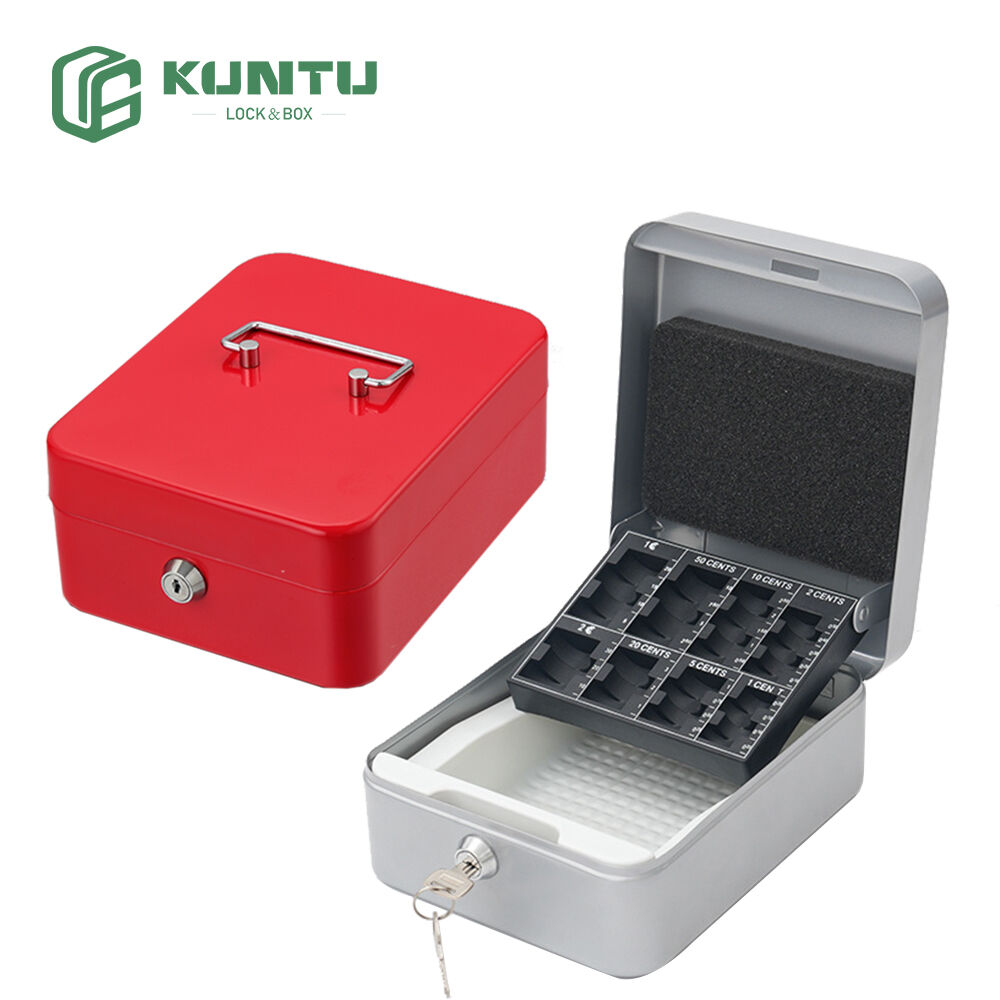
Cash discrepancies—whether from human error, miscounts, or internal theft—are a persistent and costly headache for retail businesses. Even small daily variances (a few dollars per register) can add up to thousands in lost revenue annually, while larger discrepancies often signal operational gaps or fraudulent activity. For retailers, the solution lies not in sporadic audits or reactive measures, but in a standardized cash handling SOP (Standard Operating Procedure) that creates accountability at every step. At the center of this system is a secure cash box—more than just a storage container, it acts as a critical "safety transfer station" and "responsibility demarcation point" between shifts, staff, and departments. By integrating cash boxes into a end-to-end standardized workflow—from cash register drawer to back-office reconciliation, and finally to bank deposit—retailers can minimize human error, deter internal theft, and drive cash discrepancies down to near zero. This article details the actionable SOP and role of cash boxes in transforming retail cash management.
The Root Causes of Retail Cash Discrepancies
Cash discrepancies in retail stem from two primary sources: accidental errors and intentional misuse. Accidental errors include miscounting change for customers, misrecording transactions in the POS system, mixing personal and business cash, or losing receipts. These errors are often amplified by inconsistent processes—no clear protocol for counting cash at shift start/end, unmonitored cash transfers between staff, or vague responsibility for cash storage. Intentional misuse, such as internal theft or "skimming" (siphoning cash before it’s recorded in the POS), thrives in environments with weak accountability and opaque workflows. A 2025 retail security report found that 68% of cash discrepancies are traceable to inconsistent handling processes, while 22% are linked to internal theft—highlighting the need for both standardization and secure transfer points.
Traditional cash management, which relies on ad-hoc counting and generic storage, fails to address these root causes. A standardized SOP with cash boxes as the linchpin solves this by creating a transparent chain of custody: every cash movement is documented, every transfer requires sign-off, and every staff member is accountable for the cash in their care. The cash box, with its secure locking mechanism and traceable access, turns vague "team responsibility" into clear individual accountability.
End-to-End Standardized Cash Handling SOP with Cash Boxes
Phase 1: Shift Start – Cash Box as the Initial Accountability Hub
The SOP begins with a structured shift handoff to ensure consistency from the start. Each cashier is assigned a dedicated cash box (preferably with a unique serial number) and a set of keys or a personalized PIN for access—no shared access is permitted. At the start of the shift, the cashier and a supervisor conduct a joint count of the starting cash float (pre-determined amount for making change) from the store vault. The float is counted twice: first by the supervisor, then by the cashier, with both signing a log that records the amount, cash box serial number, and timestamp. The float is then placed into the cash box, which is locked and transported to the cashier’s register.
The cash box remains with the cashier for the entire shift, stored securely under the register or in a locked drawer when not in use. Only the assigned cashier and authorized supervisors have access, with all access logged in a digital or physical record. This step eliminates the risk of float tampering before the shift begins and establishes clear ownership of the cash from the outset.
Phase 2: Shift Execution – Cash Box as a Secure Mid-Shift Transfer Tool
During the shift, cash accumulation in the register drawer increases theft risk and makes counting more cumbersome. The SOP mandates regular "cash drops"—transferring excess cash from the register to the cash box—to keep drawer cash at a minimum (e.g., $200 in small denominations for change). Cash drops are performed by the cashier and witnessed by a supervisor, following a strict process:
-
The cashier counts the excess cash, verifies it against the POS transaction log for the period, and fills out a cash drop slip with the amount, time, and register number.
-
The cash and slip are placed into a sealed compartment within the cash box (separate from the starting float), and the box is locked.
-
Both the cashier and supervisor sign the cash drop slip and the cash box access log, confirming the transfer.
This process ensures that every dollar entering the cash box is documented, with two witnesses to prevent skimming or miscounting. The cash box’s partitioned design keeps starting float, mid-shift drops, and receipts organized, reducing confusion during end-of-shift reconciliation.
Phase 3: Shift End – Cash Box as the Reconciliation and Responsibility Handover Point
End-of-shift reconciliation is the most critical step for identifying discrepancies, and the cash box streamlines this process while enforcing accountability. The cashier and supervisor return to a secure back-office area with the cash box and register drawer, and follow these steps:
-
The cashier empties the register drawer, counts the remaining cash, and subtracts the starting float (stored in the cash box) to get the net cash collected.
-
The supervisor counts the mid-shift cash drops from the cash box and adds them to the net collected amount, cross-referencing with the cash drop slips and POS transaction total.
-
Any discrepancy (over or short) is noted immediately, with the supervisor investigating small variances (e.g., under $5) and escalating larger ones to management. Both parties sign a reconciliation form, which is attached to the cash box for documentation.
The cash box, now holding the total collected cash, receipts, and reconciliation form, is sealed and transported to the store vault by the supervisor and cashier (two-person rule). This handover marks the end of the cashier’s responsibility and the start of the vault manager’s, with the cash box acting as the immutable record of the shift’s cash flow.
Phase 4: Bank Deposit – Cash Box as the Secure Transit Container
When preparing cash for bank deposit, the cash box continues to serve as a secure, traceable container. The vault manager and a second staff member count the cash from the cash box (verifying against the reconciliation forms) and prepare deposit slips. The cash, deposit slips, and all supporting documentation (cash drop slips, reconciliation forms) are placed back into the cash box, which is locked with a tamper-evident seal (serialized for tracking).
If using an armored car service, the sealed cash box is handed over to the driver, with both the vault manager and driver signing a transfer log. If staff deposit directly at the bank, the cash box remains locked during transit, with the staff member held accountable for its security. Upon successful deposit, the bank issues a receipt, which is attached to the cash box’s documentation for full audit trail closure. This final step ensures cash remains secure during transit and completes the chain of custody from register to bank.
Key Features of a Cash Box for Retail SOP Compliance
To maximize the effectiveness of the standardized SOP, retailers must select cash boxes with features tailored to retail cash management:
-
Partitioned Interior: Separate compartments for starting float, mid-shift drops, receipts, and deposit slips to organize cash and simplify reconciliation.
-
Secure Locking Mechanism: Keyed, combination, or PIN locks with restricted access (no shared keys/PINs) to enforce individual accountability. Tamper-evident locks that leave visible marks if opened unauthorized are ideal.
-
Durable Construction: Heavy-gauge steel with anti-pry edges to resist forced entry, protecting cash from internal or external theft.
-
Traceable Design: Unique serial numbers, tamper-evident seals, and compatibility with access logs to create a complete audit trail.
-
Portability: Compact size (10-12 inches) for easy transport between register, back office, and vault, without sacrificing storage capacity.
The Business Impact of Standardized Cash Handling with Cash Boxes
Implementing a standardized SOP with cash boxes delivers tangible benefits beyond reduced discrepancies. Retailers typically see a 80-90% reduction in cash variances within the first 3 months, translating to thousands in recovered revenue. Internal theft is deterred by the transparent chain of custody and two-person verification steps, with many retailers reporting a 40%+ drop in shrinkage related to cash theft.
Operational efficiency also improves: end-of-shift reconciliation time is cut by 30-50%, as the cash box’s organization eliminates the need for time-consuming recounts. Audits become faster and more effective, with the cash box and supporting documentation providing a clear trail of every cash movement. Additionally, staff training is simplified—standardized processes reduce errors from new hires, while clear accountability boosts staff confidence and reduces fraud risks.
Conclusion: Cash Boxes as the Backbone of Retail Cash Integrity
Retail cash discrepancies are not inevitable—they are the result of inconsistent processes and weak accountability. By building a standardized cash handling SOP around the cash box, retailers create a transparent, traceable workflow that minimizes human error, deters internal theft, and drives discrepancies to near zero. The cash box, acting as a safety transfer station and responsibility demarcation point at every phase—from shift start to bank deposit—ensures that every dollar is accounted for and every staff member is accountable. For retailers looking to protect their bottom line and build operational integrity, the cash box is more than a storage tool—it’s the backbone of a secure, efficient cash management system.